
Black History Month: Healing Is Collective Work
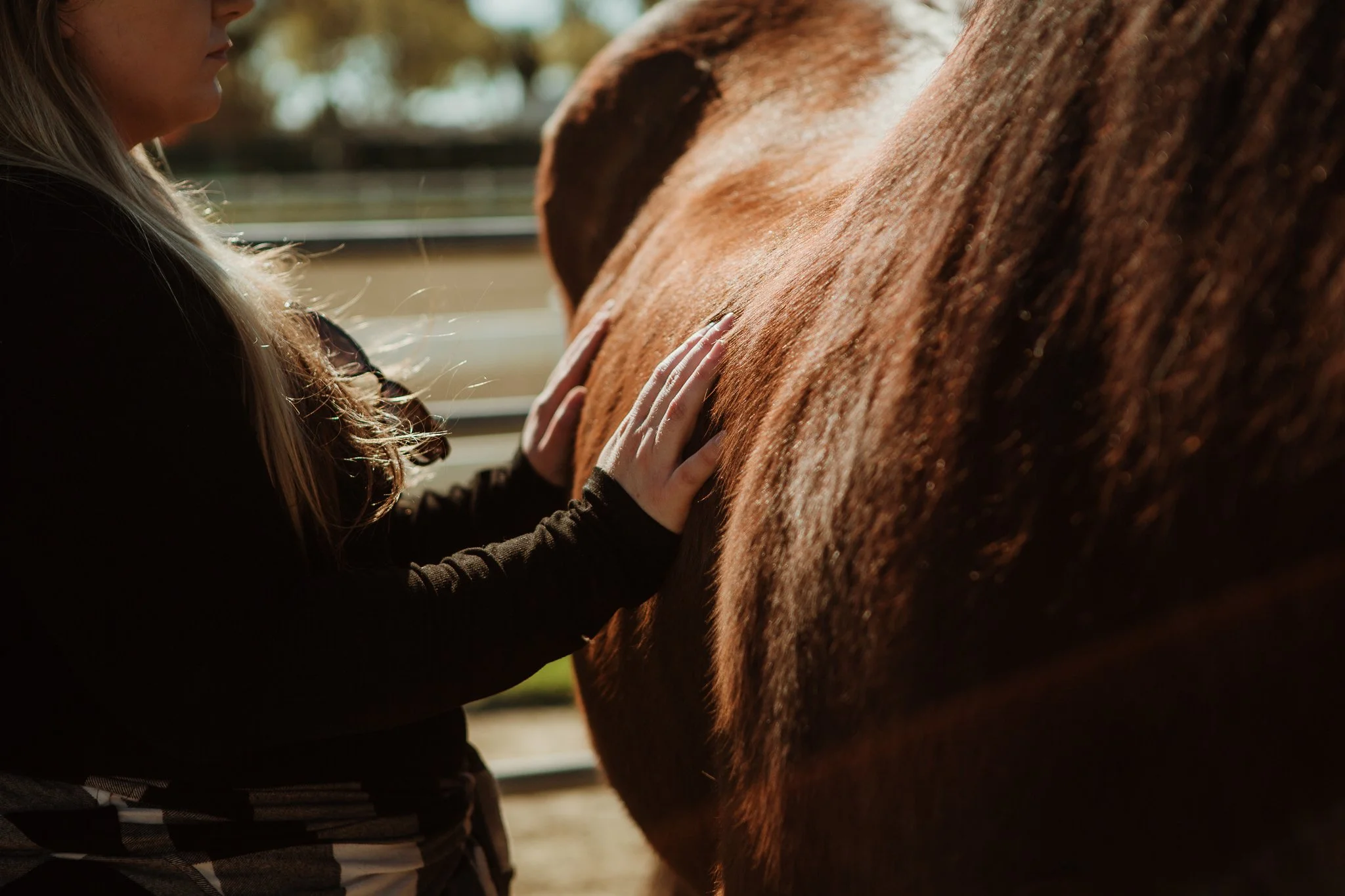
"My humanity is bound up in yours, for we can only be human together."
— Desmond Tutu
Black History Month: Healing Is Collective Work
As we enter Black History Month, we're reminded that our liberation is bound together. The mental health field itself has been shaped by the courage, brilliance, and relentless advocacy of Black healers, scholars, and activists who've fought for equity in care, challenged oppressive systems, and brought ancestral wisdom into clinical spaces.
Dr. Kenneth B. Clark and Dr. Mamie Phipps Clark's groundbreaking research on racial identity and self-concept in the 1940s fundamentally reshaped our understanding of the psychological impact of systemic oppression and directly influenced the landmark Brown v. Board of Education decision.1 Their work laid the foundation for understanding trauma not just as an individual experience, but as collective and intergenerational.
More recently, Dr. Resmaa Menakem's work on racialized trauma and somatic abolitionism has transformed how clinicians understand the body's role in healing from historical and cultural trauma. In My Grandmother's Hands, Menakem writes: "Trauma is not destiny. We can heal — and in healing ourselves, we can begin to heal our relationships, our communities, and our world."2 His emphasis on somatic practices and nervous system regulation draws directly from African and African American traditions of embodied healing.
Dr. Joy DeGruy's research on Post Traumatic Slave Syndrome illuminates how the legacy of slavery continues to impact mental health in Black communities today, emphasizing that healing must address not just individual symptoms but systemic and historical wounds.3 She states, "Healing requires us to understand the injury. We cannot heal what we do not acknowledge."
The concept of "somatics" itself — working with the body to process trauma and regulate the nervous system — has deep roots in African diasporic practices. Dr. Gail Parker, a psychologist and yoga therapist, has written extensively about how Black women have used embodied practices for healing and resistance throughout history.4 These practices weren't called "trauma-informed care" or "somatic therapy" at the time, but they were — and are — profound acts of survival and healing.
The American Psychological Association now recognizes that "mental health cannot be separated from the social determinants of health, including racism, discrimination, and systemic inequities."5 Black therapists, researchers, and advocates have been saying this for generations.
Honoring Black History Month means more than recognition. It means examining our own practices, questioning who has access to healing spaces, and committing to equity not as a concept, but as action. It means acknowledging that the therapeutic tools we use today — from EMDR to Somatic Experiencing to community-based healing — have been shaped by Black wisdom, Black resistance, and Black innovation.
As Audre Lorde reminds us: "There is no such thing as a single-issue struggle because we do not live single-issue lives."6 Our healing work must be intersectional because our humanity is intersectional.
Valentine's Day: Love Beyond the Hallmark Aisle
Valentine's Day often gets reduced to romantic gestures and pink confetti. But love is so much more expansive than that.
Dr. bell hooks, in All About Love, writes: "To truly love we must learn to mix various ingredients — care, affection, recognition, respect, commitment, and trust, as well as honest and open communication."7 Love, she argues, is not a feeling but a practice. It's a verb, not just a noun.
From a clinical perspective, self-love isn't indulgent — it's foundational to nervous system regulation. Research in attachment theory shows that our capacity to offer secure attachment to others is directly related to our ability to offer it to ourselves first.8 When we practice self-compassion, we activate the parasympathetic nervous system, moving out of fight-flight-freeze responses and into a state where connection becomes possible.9
Love is the boundary you set because you know your worth. Love is the friend who sits with you in your grief without trying to fix it. Love is showing up for justice even when it's hard. Love is the choice to extend compassion — to yourself, to your community, to the world.
For many people, February 14th can feel isolating, especially if you're grieving, healing from relationship wounds, or simply not in a romantic partnership. But love doesn't require a partner. It requires presence. It requires showing up for yourself and others with tenderness.
The polyvagal theory, developed by Dr. Stephen Porges, teaches us that safety is the foundation for connection.10 We cannot truly love ourselves or others when our nervous systems are in a state of threat. This February, perhaps the most radical act of love is creating safety: for your own nervous system, for your relationships, for your community.
Walking Into Interconnection
So what does February ask of us?
It asks us to hold both personal and collective healing in the same breath. To honor our individual journeys while recognizing that none of us walk alone. To practice love as a verb, not a noun — an action we take every day in small, sacred ways.
James Baldwin wrote: "Love takes off the masks that we fear we cannot live without and know we cannot live within."11 This February, what masks might you be ready to set down? What truths might you be ready to speak? What healing might become possible when we remember that our humanity is bound up together?
Research consistently shows that social connection is one of the strongest predictors of mental health and longevity.12 We are wired for relationship. Trauma happens in isolation; healing happens in connection. This isn't just poetic — it's neurobiology.
This month, consider:
How might you honor Black History Month not just with recognition, but with curiosity, learning, and action? What Black authors, therapists, or thought leaders could you learn from?
Where can you extend the love you've been withholding to yourself? What would self-compassion look like in practice today?
What would it look like to walk through February with the understanding that your humanity and mine are bound up together? How might this shift the way you show up in relationship?
Because healing doesn't happen in isolation. It happens in relationship. It happens when we choose to see one another, honor our interconnection, and walk together — even when the path is uncertain.
However you find yourself in February, know this: you are not walking alone. We are with you. Because, as Desmond Tutu reminds us, we can only be human together.
References and Further Reading:
For those interested in deepening their understanding of these topics, we recommend:
My Grandmother's Hands by Resmaa Menakem
Post Traumatic Slave Syndrome by Dr. Joy DeGruy
All About Love by bell hooks
The Fire Next Time by James Baldwin
Restorative Yoga for Ethnic and Race-Based Stress and Trauma by Dr. Gail Parker
The work of Dr. Kenneth and Mamie Phipps Clark on racial identity development
Resources from the Black Emotional and Mental Health Collective (BEAM): https://www.beam.community/
Footnotes
Clark, K. B., & Clark, M. P. (1947). Racial identification and preference in Negro children. In T. M. Newcomb & E. L. Hartley (Eds.), Readings in social psychology (pp. 169-178). New York: Holt, Rinehart and Winston. https://www.naacpldf.org/brown-v-board/significance-doll-test/ ↩
Menakem, R. (2017). My Grandmother's Hands: Racialized Trauma and the Pathway to Mending Our Hearts and Bodies. Central Recovery Press. https://www.resmaa.com/grandmother ↩
DeGruy, J. (2017). Post Traumatic Slave Syndrome: America's Legacy of Enduring Injury and Healing (Revised edition). Joy DeGruy Publications Inc. https://www.joydegruy.com/post-traumatic-slave-syndrome ↩
Parker, G. (2020). Restorative Yoga for Ethnic and Race-Based Stress and Trauma. Singing Dragon. https://www.blacklotusyoga.net/ ↩
American Psychological Association. (2021). Apology to People of Color for APA's Role in Promoting, Perpetuating, and Failing to Challenge Racism, Racial Discrimination, and Human Hierarchy in U.S. https://www.apa.org/about/policy/racism-apology ↩
Lorde, A. (1982). Learning from the 60s. Address at Harvard University. https://www.blackpast.org/african-american-history/1982-audre-lorde-learning-60s/ ↩
hooks, b. (2000). All About Love: New Visions. William Morrow. https://www.bellhooksinstitute.com/ ↩
Bowlby, J. (1988). A Secure Base: Parent-Child Attachment and Healthy Human Development. Basic Books. ↩
Neff, K. D., & Germer, C. K. (2013). A pilot study and randomized controlled trial of the mindful self-compassion program. Journal of Clinical Psychology, 69(1), 28-44. https://self-compassion.org/the-research/ ↩
Porges, S. W. (2011). The Polyvagal Theory: Neurophysiological Foundations of Emotions, Attachment, Communication, and Self-regulation. W. W. Norton & Company. https://www.stephenporges.com/ ↩
Baldwin, J. (1963). The Fire Next Time. Dial Press. https://www.blackpast.org/african-american-history/fire-next-time-1963/ ↩
Holt-Lunstad, J., Smith, T. B., & Layton, J. B. (2010). Social relationships and mortality risk: A meta-analytic review. PLOS Medicine, 7(7), e1000316.https://journals.plos.org/plosmedicine/article?id=10.1371/journal.pmed.1000316
At Walk Intuit, we offer trauma-informed therapy services including equine-assisted psychotherapy, EMDR, somatic therapy, and more. If you're interested in exploring how these approaches might support your healing journey, please reach out to learn more about our programs.
